
What to do if my cat is overweight?
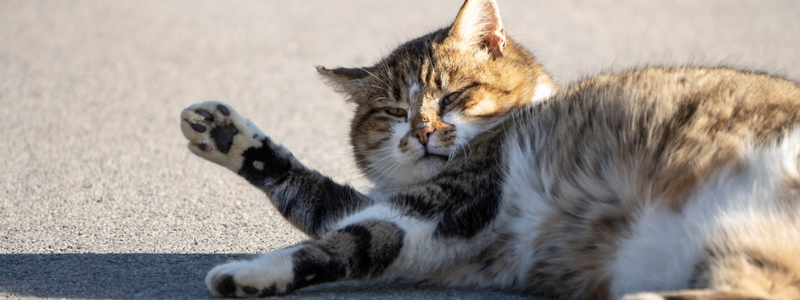
If your cat is overweight: adjust their diet, reduce the amount of treats, and help them increase their energy expenditure. According to APOP, the Association for Pet Obesity Prevention, nearly 40% of cats in France are overweight or obese. This phenomenon is increasing due to the sedentary lifestyle of felines.
More than just an aesthetic concern, it's a health issue for your furball. Studies from the Waltham Institute, published by Professor Dominique Grandjean and Doctor Richard Butterwick, show that an overweight cat loses an average of 1.9 years of life expectancy. An overweight cat is 3 times more likely to develop diabetes. So, how can you react effectively without starving your companion? The Tomojo team answers all your questions about overweight cats!
How do I know if my cat is overweight?

To determine if your cat is overweight, veterinarians refer to the Body Condition Score (BCS). This is an internationally validated scientific method (notably by the WSAVA - World Small Animal Veterinary Association).
Here are 3 ways to assess your furry friend's weight at home.
1. The palpation test: rib method
This is the most reliable method to perform at home. Place both hands flat on your cat's rib cage:
- Ideal weight: You should easily feel their ribs under your fingers, without pressing.
- Overweight: You can feel the ribs, but they are difficult to count individually due to a nascent layer of fat.
- Obese: The ribs are completely impossible to perceive or palpate, even with slight pressure.
2. Visual observation: silhouette
Observe your cat from above when standing, then from the side.
- Normal silhouette: Their waist is visible behind the ribs with an "hourglass" effect when viewed from above, and their belly is slightly tucked up when viewed from the side.

- Overweight silhouette: The waist is not defined, the back widens, and an abdominal fat pouch is visible from the side.

3. Weighing
To know if your cat is overweight, you can weigh them, but you must compare this data to the average weight of cats of the same breed, size, and sex.
It is often stated that the average weight of an adult cat is between 3 and 5 kg. But you will see in the table below that the ideal weight of a cat varies from 1.8 to 10.5 kg depending on the breed of feline!
| Cat Breed | Sex | Average Ideal Weight | Alert Threshold (Overweight at +10%) |
|---|---|---|---|
| Singapura (Small build) | Female | 1.8 kg to 2.3 kg | From 2.5 kg |
| Singapura (Small build) | Male | 2.5 kg to 3.0 kg | From 3.3 kg |
| Domestic Shorthair / European | Female | 3.2 kg to 4.2 kg | From 4.6 kg |
| Domestic Shorthair / European | Male | 4.0 kg to 5.0 kg | From 5.5 kg |
| Persian | Female | 3.5 kg to 4.5 kg | From 5.0 kg |
| Persian | Male | 4.5 kg to 6.0 kg | From 6.6 kg |
| Birman | Female | 3.5 kg to 4.5 kg | From 5.0 kg |
| Birman | Male | 4.5 kg to 5.5 kg | From 6.0 kg |
| Chartreux / British Shorthair | Female | 3.5 kg to 5.0 kg | From 5.5 kg |
| Chartreux / British Shorthair | Male | 5.5 kg to 7.5 kg | From 8.2 kg |
| Maine Coon (Large build) | Female | 5.0 kg to 7.0 kg | From 7.7 kg |
| Maine Coon (Large build) | Male | 7.5 kg to 10.5 kg | From 11.5 kg |
💡 A cat is considered overweight when it exceeds its ideal weight by 10% to 19%. Beyond 20%, it is considered obese.
Example: female domestic shorthair cat
- ideal weight: 4 kg
- overweight: 4.6 kg
- obese: from 4.8 kg.
If you have any doubts after performing these tests, we recommend consulting your veterinarian. Only a professional can accurately calculate your feline's body mass index and rule out any underlying medical causes. Our information is provided for guidance only and does not replace the advice of a licensed veterinarian.
Overweight cat: causes
An overweight cat often means your feline friend consumes more calories than they expend. But there are other reasons that can explain a cat's overweight condition!
1. Spaying/neutering: castration and ovariectomy
According to the study Effect of gonadectomy on energy expenditure and body composition of cats published by Fettman, M. J., Stanton, C. A., Harrison, L. M., et al. in the Journal of Feline Medicine and Surgery (JMFS), spaying/neutering alters a cat's metabolism in less than 48 hours.
The spaying/neutering operation causes hormonal fluctuations that lead to an increase in the cat's appetite by 20% to 25%. Simultaneously, the caloric needs of a sterilized cat decrease by 20%. Therefore, if you do not adjust the food portion, your cat risks becoming overweight.
2. Inappropriate or unbalanced diet
There are three problems related to diet:
- Free-feeding: limit kibble, especially if you have an indoor cat, as not all cats can self-regulate their food intake.
- Caloric density: a diet too rich in carbohydrates and poor in soluble fiber blocks the satiety signal, causing your cat to eat more or ask for food more often.
- Lack of calculation of energy needs: energy needs vary from one feline to another.
| Variation Factor | Impact on Daily Caloric Needs |
|---|---|
| Sedentary indoor cat | Decrease of 10% to 15% in needs |
| Low outdoor temperature (outdoor access) | Increase of 5% to 10% in needs |
| Age (Senior cat over 11 years old) | Metabolic variations requiring a precise nutritional profile |
3. Underlying endocrine pathologies
Certain diseases disrupt the body and can explain an overweight or obese cat:
- Cushing's Syndrome (Hyperadrenocorticism): overproduction of cortisol which stimulates appetite (polyphagia), leads to muscle wasting, and promotes fat storage in the abdomen.
- Acromegaly: excessive production of growth hormone which induces severe insulin resistance. More than 80% of cats suffering from acromegaly develop type 2 diabetes associated with weight gain.
- Hypothyroidism: rarer in cats (unlike dogs), it generally slows down metabolism.
4. Medical treatments
Certain veterinary protocols essential for treating other diseases have side effects that alter your feline's metabolism:
- Corticosteroids (glucocorticoids): used for allergies or inflammatory diseases, they drastically increase the feeling of hunger and can lead your cat to become overweight.
- Progestins: sometimes prescribed for behavioral or sexual disorders, they promote lethargy and fat storage.
Overweight cat risks: what are they?
An overweight cat accumulates excess adipose tissue, which severely impairs its metabolic, locomotor, and respiratory functions.
1. Metabolic and endocrine diseases
- Type 2 diabetes: an overweight cat has a 3 to 4.5 times higher risk of diabetes compared to a cat at its ideal weight. Adipose tissue secretes molecules that block the action of insulin.
- Hepatic lipidosis (fatty liver disease): an overweight cat deprived of food for 24 to 48 hours can have its body massively mobilize stored fats towards the liver, which can cause fatal acute liver failure.
2. Musculoskeletal disorders
An overweight cat may suffer from arthritis and joint pain (hips, knees, elbows) related to its sedentary lifestyle. The pain limits movement and play, accelerating muscle wasting and causing a decrease in caloric expenditure, which exacerbates weight gain.
3. Cardiorespiratory and urinary disorders
- Respiratory distress syndrome: intrathoracic fat deposits compress the lungs and diaphragm. The cat becomes breathless with the slightest effort, tolerates heat poorly, and sleeps more than usual.
- Urinary stones and cystitis: an overweight cat moves less, urinates less often, and the stagnation of urine in the bladder can promote the formation of crystals (struvites or calcium oxalates) and cause urinary tract infections.
4. Decreased life expectancy and surgical risks
- Loss of longevity: according to data from the Waltham Petcare Science Institute, overweight reduces a cat's life expectancy by an average of 1.9 years.
- Increased anesthetic risk: in the event of mandatory surgery, fat stores anesthetic molecules, making drug dosage more complex to manage, recovery longer, and healing more difficult.
⚠️ WARNING
An overweight cat can alter your feline's behavior. The inability to groom themselves properly (especially on the lower back), the appearance of dandruff, dull fur, or dermatitis, impact your feline's psychological well-being. They may become more tense and frustrated in daily life.
5 tips to help your cat lose weight
Helping an overweight cat lose weight requires a progressive approach. A sudden transition can generate stress in your feline and even trigger serious liver pathologies!
1. Avoid drastic deprivation!
The biggest mistake is to suddenly reduce your cat's usual portion of kibble.
Too severe a caloric restriction causes immediate psychological frustration. In addition to increasing your feline's anxiety, you risk incessant meowing as they will beg for food.
Medically, a sudden deprivation of food in an overweight cat exposes them to hepatic lipidosis, a fatal accumulation of fat in the liver. The ideal weight loss for an overweight cat should be slow and linear, between 0.5% and 2% of the cat's total body weight per week.
2. Adapt physical activity according to your cat's environment
An indoor cat is generally more sedentary than an outdoor cat. They are more at risk of being overweight or even obese because their energy expenditure is limited by their environment.
For an outdoor cat, the garden and neighborhood are sources of natural stimulation. Whereas an apartment cat is considered sedentary due to the limited space available to recreate its natural predator-hunter behavior.
To increase the energy expenditure of your overweight apartment cat, you can:
- Replace their bowl with feeder toys (kibble balls, food puzzles). Forcing the cat to push an object or search for their food grain by grain increases their mealtime, promotes satiety, and burns essential calories.
- Arrange the living space vertically (cat trees, protected wall shelves). Placing their points of interest higher up forces them to jump and climb, engaging their deep muscles.
- Implement 3 to 4 play sessions of 5 minutes per day, using a feather wand or a fake mouse, to awaken their chasing instinct without impacting their cardiorespiratory system.
Cats are predators made for short, intense, and repeated efforts.
3. Choose an adapted diet: label analysis
For your overweight cat to lose weight without being hungry and while limiting muscle loss, you need to feed them kibble with high nutritional density.
According to the clinical recommendations of Dr. Charlotte Devaux, a veterinarian specializing in cat and dog nutrition, a quality diet for an overweight cat must meet the following criteria:
- High protein content: minimum 30 to 40% (crude)
- Rich in soluble and insoluble fibers: crude cellulose minimum 5 to 8%
- Reduced fat content: maximum 10 to 12% crude
- Digestible carbohydrates: maximum 20 to 25%
Tomojo cat kibble recipe meets these veterinary criteria, perfectly suited for an overweight cat.
Frequently asked questions about overweight cats
How long does it take for a cat to lose weight?
Allow between 3 and 6 months for an overweight cat to lose weight, depending on the excess fat to be eliminated. To limit health risks, your cat should not lose more than 0.5% to 2% of their body weight per week, which is about 20 to 80 grams per week for a 4 kg cat. The secret to success lies in consistency, not speed!
Is a 4kg cat overweight?
No, a 4kg cat is not necessarily overweight. This depends on their breed.
For example, a 4 kg Singapura cat is overweight. Conversely, a 4 kg Maine Coon, Norwegian, or Birman is in a growth phase or is slender, or even thin. Crude weight alone is not enough to say that a cat is overweight: you need to assess your cat's body shape.
At what weight is my cat considered overweight?
A cat is considered overweight as soon as it exceeds its theoretical ideal weight by 10% to 15%. If it exceeds its ideal weight by 20% or more, it falls into the category of clinical obesity.