
What cat to get when you're allergic?
The least allergenic cat breeds are the Siberian, Russian Blue, Balinese, Devon Rex, Cornish Rex, and Sphynx. All these breeds remain allergenic to some extent, as cat allergies are not caused by fur but by a protein present in the cat's saliva and sebum. Adopting a cat if you are allergic is possible, provided you choose the right breed and adapt your daily life.
Why are people allergic to cats?
Contrary to popular belief, it is not cat hair that triggers allergies!
The culprit is called Fel d 1, a protein produced in the cat's salivary and sebaceous glands.
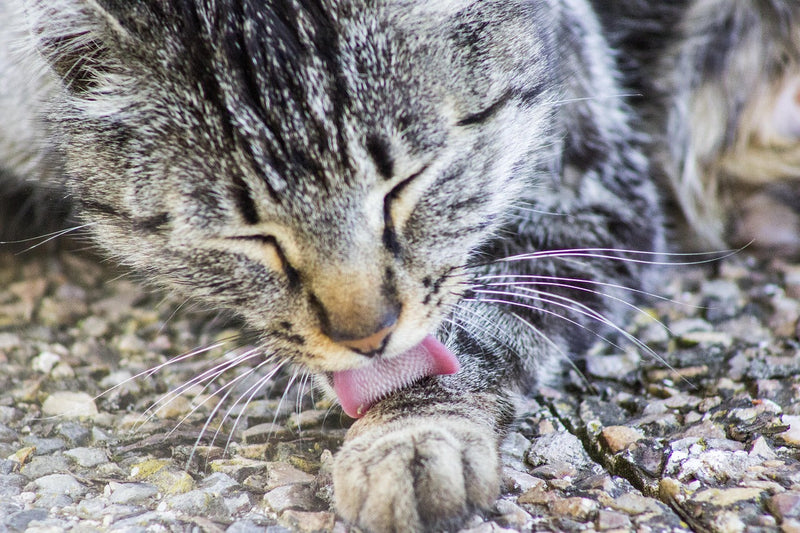
When your cat grooms itself, it deposits saliva on its coat. The Fel d 1 protein then gets onto the fur, then spreads into the air and settles on your furniture, clothes, or bedding.
According to a study published by Bastien, B. C., Renner, L. M., Rungsuriyawiboon, O., et al. in the Journal of Feline Medicine and Surgery in 2019, scientific data is still lacking to confirm that certain breeds, such as the Siberian or Balinese, actually produce less Fel d 1 than others. Their hypoallergenic reputation is mainly based on owner testimonials, and not on systematic clinical measurements.
This doesn't mean these breeds aren't worth considering. Simply put, each cat remains a unique individual, with its own production of Fel d 1.
Does an "anti-allergy" cat really exist?
No, a completely anti-allergy cat does not exist. Here are 3 common misconceptions to know before adopting:
- A 100% hypoallergenic cat does not exist: the term "hypoallergenic" means that Fel d 1 production is reduced, not eliminated.
- Allergy to cat hair does not exist: it is the Fel d 1 protein, carried by the hair, that is responsible.
- Even hairless cats, like the Sphynx, remain allergenic: Fel d 1 comes from saliva and sebum, not the coat itself.
Which cat breeds are the least allergenic?
Here is a table of the 6 cat breeds reputed to be the least allergenic:
| Breed | Fel d 1 production | Indicative price | Specific characteristics |
|---|---|---|---|
| Siberian | Reduced | €1,000 to €2,000 | Long, dense coat, weekly brushing recommended |
| Russian Blue | Reduced | €1,200 to €2,000 | Short, dense coat, limited maintenance |
| Balinese | Reduced | €800 to €1,500 | Medium-long hair, little undercoat |
| Devon Rex | Reduced | €900 to €1,600 | Short, curly coat, limited shedding |
| Cornish Rex | Reduced | €900 to €1,600 | No undercoat |
| Sphynx | Variable | €1,500 to €2,500 | Hairless, but sebum concentrated on the skin |
Which cats are the most allergenic?
Certain cat profiles produce more Fel d 1 than others:
- Unneutered males: Fel d 1 production is stimulated by testosterone.
- Males, compared to females, with equivalent reproductive status.
- Older cats, whose Fel d 1 production tends to increase over time.
A study published in the Journal of Allergy and Clinical Immunology in 2018 shows that unneutered males have significantly higher urinary concentrations of Fel d 1 than neutered males.
How to reduce allergies daily with a cat?
Adapting your home can limit your exposure to Fel d 1 without giving up your cat!
- Use a HEPA filter vacuum cleaner, capable of retaining fine airborne particles.
- Prefer smooth floor coverings (hardwood, tile) rather than carpet, which retains allergens.
- Ventilate your home daily, even for a few minutes.
- Limit direct contact with your face and avoid letting the cat sleep in your bed.
- Designate "white zones" in the house, meaning a room where your cat does not have access, such as your bedroom.
Does your cat constantly meow to access forbidden rooms? Discover our guide on how to calm a meowing cat.
Neutering, brushing, consulting: actions against cat allergies
Here are 3 concrete actions to reduce the amount of Fel d 1 released by your cat:
- Neuter your cat to reduce Fel d 1 production, especially in males. This procedure also changes their metabolism and can increase their appetite. Remember to adjust their ration to avoid having an overweight cat.
- Brush your cat regularly, with a damp glove, outdoors if possible, to remove as much dried saliva and sebum as possible without dispersing them indoors.
- Consult an allergist if your symptoms persist despite these precautions. A healthcare professional can assess your sensitivity and offer appropriate follow-up.
There are also kibbles formulated to neutralize some of the Fel d 1 present in cat saliva. This type of kibble for cat allergies is a supplement to essential daily actions!
Frequently asked questions about cats and allergies
Is it possible to have a cat if you are allergic?
Yes, it is possible to have a cat even if you are allergic. The allergy is caused by a specific protein, Fel d 1, whose spread can be reduced: choice of breed, neutering, regular brushing, and home arrangements. Spend time with the cat before adoption to assess your tolerance.
Which cat is the most allergenic?
Unneutered male cats and older cats are the most allergenic.
How much does a hypoallergenic cat cost?
The price of a hypoallergenic cat varies between €800 and €2,500 depending on the breed. Balinese and Devon Rex are generally the most accessible, while the Sphynx reaches the highest prices.
Is the Siberian cat really hypoallergenic?
The Siberian cat produces, on average, less Fel d 1 than other breeds, but scientific data remains limited to systematically confirm this. It remains allergenic, at a reduced level.
Image by José Manuel de Laá from Pixabay.